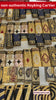
Fake Vintage Lighters: How Collectors Spot Forgeries Before Buying
, by Mehrad Ghasemi, 5 min reading time
, by Mehrad Ghasemi, 5 min reading time
In recent years, vintage lighters have attracted unprecedented attention. What was once a niche collector’s field has expanded rapidly—driven by scarcity, rising prices, and a broader cultural shift toward elegance, ritual, and cigar smoking.
As genuine vintage lighters become harder to find, demand has grown far faster than supply. Predictably, this gap has been filled not by discovery, but by imitation.
Today, fake vintage lighters are everywhere.
And not only lighters.
The same pattern can be seen across watches, pens, fragrances, and other luxury objects. When demand rises and knowledge does not keep pace, counterfeit markets follow.
This journal exists precisely because of that imbalance.
Collectors often use the word fake broadly, but in practice there are important distinctions.
Replica
A modern copy designed to imitate the appearance of a vintage lighter, usually produced cheaply and never intended to withstand scrutiny.
Forgery
An altered original—re-engraved, restamped, or cosmetically modified to impersonate a more valuable model or brand.
“Frankenstein” Lighter
The most deceptive category. A lighter assembled from mixed parts: an old mechanism combined with non-original components, false cases, or fantasy designs that never existed historically.
Many of the most convincing fakes fall into this third category.

One of the clearest warning signs in today’s market is abundance.
Certain models appear in quantities that defy historical reality. A notable example is the so-called Roy King style lighters, where an overwhelming majority on the market are not authentic vintage pieces. In some cases, estimates among experienced collectors put the number of non-original examples well above ninety percent.
These lighters often present themselves as rare, luxurious, or even unique—yet appear repeatedly, in near-identical condition, across multiple sellers and platforms.
Scarcity does not multiply. Fakes do.

Authentic factory sealing did exist for brands such as Dunhill, Cartier, and S.T. Dupont, but it followed specific, consistent formats defined by the manufacturer. These were controlled protective covers or seals applied at the time of sale—not generic plastic wraps added later. Today, many sellers place used lighters inside modern plastic coverings and present them as NOS (New Old Stock). To an experienced collector, the contradiction is immediate: visible wear, ignition marks, roller polishing, or internal use patterns cannot coexist with true factory-sealed condition. A seal does not erase history. When signs of use are present beneath plastic, the seal itself becomes the warning.


A particularly serious issue is the misuse of precious metal markings.
It is increasingly common to see “18K” engravings on lighters that are neither solid gold nor legitimately plated. These markings are often added to give an impression of value, but in reality they represent false claims—sometimes covering inexpensive base metals finished with synthetic, decorative coatings.
Such markings are not a matter of opinion or interpretation. Applying precious metal hallmarks to objects that do not meet legal standards is, in many jurisdictions, a criminal offense.
Collectors should understand that true gold cases, or even authentic gold plating, age in specific, predictable ways. Artificial finishes do not.
Regardless of brand, era, or appearance, counterfeit lighters tend to share the same weaknesses:
Overconfidence in appearance: perfect polish, exaggerated shine, or “museum condition” claims without provenance
Incorrect combinations: case designs, engravings, or finishes that never existed together historically
Inconsistent wear: artificial aging on the exterior paired with mismatched internal condition
Non-original parts: replaced screws, rollers, valves, or internal components that do not match period manufacturing standards
Authenticity is not cosmetic. It resides in materials, construction logic, and consistency.
Prestigious names such as Cartier or S.T. Dupont are often used to legitimize questionable objects. In many cases, the mechanism may be loosely inspired by an original design, while the rest of the lighter bears no historical or manufacturing connection to the brand.
If a model looks impressive but cannot be placed within a documented production period, it should be treated with skepticism—regardless of the name engraved on it.
Collectors are rarely deceived by a single flaw. They are misled by stories.
Descriptions, claims of rarity, and seller confidence mean nothing without physical consistency. Clear photographs, correct proportions, known references, and restraint in presentation matter far more than any narrative.
Hesitation is not weakness in collecting. It is often the most valuable signal.
The purpose of this journal is not to create fear, but clarity.
As interest in vintage lighters grows, knowledge becomes the only real protection. Understanding what should exist is the fastest way to recognize what never did.
For a broader framework on value, see What Makes a Vintage Lighter Worth Collecting.
In vintage collecting, authenticity is not declared.
It is demonstrated.


